彭博新能源财经:尽管面临关税与地缘政治动荡,2025年全球清洁能源贸易仍反弹至4790亿美元



超过200%的全球过剩产能、持续被压缩的制造商利润、变幻莫测的海外关税……2026年的清洁能源圈,看似正身处一场淘汰赛的深度洗牌期。然而,拨开焦虑的迷雾,国际市场的真实数据却令人振奋。
BNEF最新发布的报告显示,2025年全球清洁能源跨境贸易依然实现了反弹,总额达到4790亿美元;而固定式储能(ESS)更是在动力电池主导的大盘中脱颖而出,交出了出货量同比暴增64%的亮眼答卷。巴基斯坦、东南亚等对传统化石能源依赖度高的新兴市场,正在高电价与能源危机的倒逼下,展现出对海外光储产品的强劲需求。
这不仅是一场供应链的洗牌,更是一次需求空间的重塑。对于国内储能从业者而言,内卷的终点是全球化。地缘冲突与能源转型共振带来的结构性红利,正为真正具备国际化运营能力的中国储能企业,构筑起新的护城河。
01核心发现
·尽管针对能源转型行业及其他全球市场的关税频出,但美国的政策并未能遏制关税核心产品在能源转型中的整体贸易。
·由中国过度投资引起的持续产能过剩,继续压缩着电池、光伏和电动汽车等领域清洁技术制造商的利润空间。
·中东地区的冲突凸显了传统化石能源供应链的脆弱性,这可能会加速向低碳技术的转型。
伦敦,2026年5月27日——2025年,全球清洁能源产品出货量达到4790亿美元,涵盖清洁技术、电池金属和电网设备等领域,实现了1%的年度增长。这一增长意味着贸易量的整体反弹,而此前在2023至2024年间,该贸易量曾下滑7%。
彭博新能源财经(BNEF)于5月27日发布的《2026年能源转型供应链报告》指出,尽管美国在能源转型行业重新恢复并调整了多项关税,但跨境清洁技术贸易在2025年依然实现了增长。
近年来,随着波动剧烈的贸易政策和地缘政治冲突日益凸显,全球供应链已成为能源行业日益关注的焦点。
随着投资者试图降低风险并免受市场波动的影响,传统化石能源供应链的脆弱性可能会加速向低碳技术的转变,并推动光伏电池片及组件、电池和电动汽车等清洁能源商品的国际贸易。
伊朗冲突导致全球化石能源价格急剧飙升,对作为石油和天然气主要净进口国的亚洲和非洲国家冲击最为严重。居高不下的价格可能会刺激全球新兴经济体加大对清洁技术的进口。BNEF的历史数据表明,对燃料进口依赖度较高的国家,其光伏设备、电池和电动汽车的进口增长往往更为强劲。
02巴基斯坦的表现尤为突出
2022年,受俄罗斯入侵乌克兰后全球燃料价格冲击的部分影响,该国的光伏组件进口额激增189%,达到10亿美元。经过多年的稳定增长,该国的小规模光伏装机量在2025年达到了创纪录的18.3GW,这主要得益于与昂贵的液化天然气(LNG)进口挂钩的高额电价,以及长期的电力短缺和负荷拉闸限。
尽管目前评估冲突对清洁技术需求的长远影响还为时过早,但全球已经见证了中国在关键能源转型产品出口上的跃升。“随着中东冲突的持续,许多市场正加倍布局清洁技术,以提高其能源安全性和韧性”BNEF贸易与供应链主管兼该报告的主要作者Antoine Vagneur-Jones表示。“这为制造商扩大用于推动能源转型的设备和产品的出口提供了巨大的机遇。”
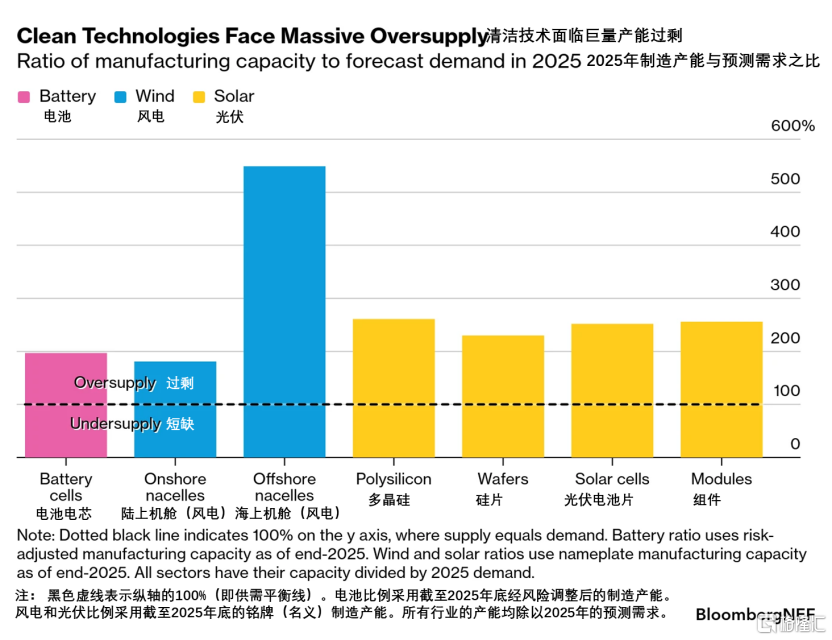
产能过剩仍然是全球供应链的一个关键特征(主要由中国的过度投资引起),并继续压缩着关键清洁技术产品的利润空间。这一现象蔓延至整个清洁技术行业,全球拥有的制造产能已超过满足整个价值链全球需求所需产能的200%。风电和电池市场也明显供过于求。中国以外地区产能的扩张目前正加剧全球的供应过剩。例如,东南亚、印度和土耳其等市场正逐步成长为光伏制造中心,埃及和埃塞俄比亚等新兴经济体也紧随其后。
注:图片来源网络
报告的核心要点之一是对本土化(Onshoring)制造浪潮的分析。尽管西方国家推出了众多政策框架,但美欧作为出口国在全球舞台上竞争的机会微乎其微。这两个市场的工厂产能虽有所增长,但产能扩张主要集中在下游环节,且由于需求放缓、政策调整以及竞争加剧,许多此前宣布的项目目前正面临延迟或取消。
尽管产能过剩依然存在,但清洁能源设备价格的下跌速度已不及前几年。2025年光伏价格继续下跌,但跌幅有所放缓,这主要是由于白银价格上涨所致。电池包价格从2024年的每千瓦时118美元下降到108美元/kWh,不过该领域的价格下跌速度同样有所放缓,主要受制于居高不下的电池金属价格。由于风机制造商希望弥补先前的亏损,陆上风电设备价格甚至略有上涨。
03彭博新能源财经《2026年能源转型供应链》的其他核心发现
·全球光伏贸易的结构变化:全球光伏贸易目前更倾向于中游的光伏电池片(Cells),而非下游的光伏组件(Modules),这反映了中国以外地区组件终端组装环节的快速扩张与多元化发展。2025年,光伏电池片占全球电池片和组件贸易总额的44%,高于前一年的25%。而在BNEF此前预测光伏部署量将出现下滑的2026年到来之前,全球光伏整体出货量已有所回落。
·新兴出口势力的崛起:印度的光伏制造业推进成效显著,其下游的产能过剩和中游的投资使其有望成为潜在的出口巨头,与中国展开直接竞争。土耳其也已成为潜在的竞争出口国。
·储能电池装机激增:尽管大多数国际贸易中的锂离子电池仍用于电动汽车,但随着全球安装量的增长,用于固定式能源储能系统(ESS)的电池份额正在上升。储能系统占该板块整体电池出货量的29%,同比增长了64%。
·东南亚市场的潜力:易受高昂化石能源价格影响的经济体(如东南亚市场的柬埔寨、老挝和越南)可能已准备好快速扩大进口。这些国家也正在利用政策加速清洁技术的应用,以应对汽油、柴油及其他燃料成本的上涨。
原文内容:
Global Clean-Energy Trade Rebounds to $479 Billion in 2025 Despite Tariffs and Geopolitical Turmoil: BloombergNEF
May 27, 2026
KEY TAKEAWAYS
·Despite numerous tariffs targeting energy transition sectors and other global markets, US policy failed to stifle overall trade in products central to the energy transition.
·Persistent overcapacity, fueled by Chinese overinvestment, continues to compress margins for clean-tech manufacturers across batteries, solar and electric vehicles.
·Conflict in the Middle East has underscored the fragility of conventional fossil-fuel supply chains, and will likely accelerate the transition to lower-carbon technologies.
LONDON, May 27, 2026 – Global shipments of clean-energy products reached $479 billion in 2025, an annual rise of 1% across clean-tech, battery metals, and grid equipment. This increase represents an overall rebound in trading volumes, which slipped 7% from 2023 to 2024. BloombergNEF’s Energy Transition Supply Chains 2026 report, released today, finds that cross-border clean-tech trade went up in 2025, despite the US reinstating and revising numerous tariffs across energy transition sectors.
Global supply chains have become an increasingly important focus for the energy industry in recent years, as volatile trade policies and geopolitical conflicts have come to the fore. As investors seek to reduce risk and shield themselves from market volatility, the fragility of conventional fossil-fuel supply chains could accelerate the shift toward lower-carbon technologies and drive greater international trade in clean-energy goods like solar cells and modules, batteries, and electric vehicles.
The Iran conflict has driven global fossil-fuel prices sharply higher, hitting Asian and African countries – which tend to be major net importers of oil and gas – hardest. Elevated prices will likely boost clean-tech imports in emerging economies the world over. Historical BNEF data suggests countries more dependent on fuel imports have tended to see stronger growth in imports of solar equipment, batteries and EVs. Pakistan stands out: In 2022, solar module imports jumped 189% to $1 billion, partly driven by the global fuel-price shock following Russia’s invasion of Ukraine. Small-scale solar installs in the country reached a record 18.3GW in 2025 after years of steady growth, fueled by high electricity tariffs linked to costly liquefied natural gas imports, as well as persistent power outages and load-shedding. Though it is still too early to assess the war’s effect on clean-tech demand, the world is already experiencing a jump in Chinese exports of key energy transition products.
“As conflict in the Middle East persists, many markets are doubling down on the deployment of clean technology to improve their energy security and resilience,” said Antoine Vagneur-Jones, head of trade and supply chains at BNEF and lead author of the report. “This presents a huge opportunity for manufacturers to expand exports of the equipment and products required to power the energy transition.”
Overcapacity remains a critical feature of global supply chains, mainly fueled by Chinese overinvestment, and continues to compress margins for key clean-tech products. This extends across clean-tech sectors, with the world hosting more than 200% of manufacturing capacity needed to meet global demand across the entire value chain. Wind and battery markets are also notably oversupplied. Expanding capacity outside of China is now compounding a global supply glut. Markets like Southeast Asia, India, and Turkey, for example, are all growing solar manufacturing hubs along with budding economies like Egypt and Ethiopia.
One of the key aspects of the report is an analysis of efforts to onshore manufacturing. Despite the introduction of numerous policy frameworks across Western nations, there is little chance of the US and the EU competing on the global stage as exporters. Factory capacity in both markets has increased, but expansions have been concentrated downstream, and many previously announced projects now face delays or cancellations due to slow demand, shifting policies, and intensifying competition.
Even though overcapacity persists, clean-energy equipment prices are not declining as rapidly as in recent years. Solar prices continued to drop in 2025, though the rate of decline slowed, mainly due to rising prices of silver. Battery pack prices fell from $118 per kilowatt-hour in 2024 to $108/kWh, although here, too, prices fell more slowly than in the past, largely due to elevated battery-metal prices. Onshore wind equipment prices even rose slightly as turbine makers hoped to make up for previous losses.
Other key findings from BloombergNEF’s Energy Transition Supply Chains 2026 include:
·Global solar trade is now more oriented toward midstream solar cells than downstream photovoltaic modules, reflecting the rapid expansion and diversification of final module assembly outside China. Solar cells made up 44% of global cell and module trade in 2025, up from 25% the year prior. Overall solar shipments fell ahead of 2026, a year when BNEF had projected solar deployment to decline.
·India’s solar manufacturing push has been successful with downstream overcapacity and midstream investment positioning it as a potential exporting giant, competing directly with China. Turkey has also emerged as a potential rival exporter.
·Most internationally traded lithium-ion batteries are bound for use in electric vehicles, but the share of batteries serving stationary energy storage systems is rising as installations grow worldwide. Energy storage systems made up 29% of overall battery shipments within the segment, growing 64% year-on-year.
·Economies exposed to high fossil-fuel prices (like Southeast Asian markets Cambodia, Laos, and Vietnam), may be primed to ramp imports quickly. These nations are also employing policies to accelerate clean-tech uptake, to combat rising gasoline, diesel, and other fuel costs.
声明:本文涉及的行业数据及图表均源自BloombergNEF官方公开报告(2026年5月27日发布),版权归原作者所有。本文仅供信息参考,不代表本账号观点,亦不构成任何投资或操作建议。
格隆汇声明:文中观点均来自原作者,不代表格隆汇观点及立场。特别提醒,投资决策需建立在独立思考之上,本文内容仅供参考,不作为实际操作建议,交易风险自担。